
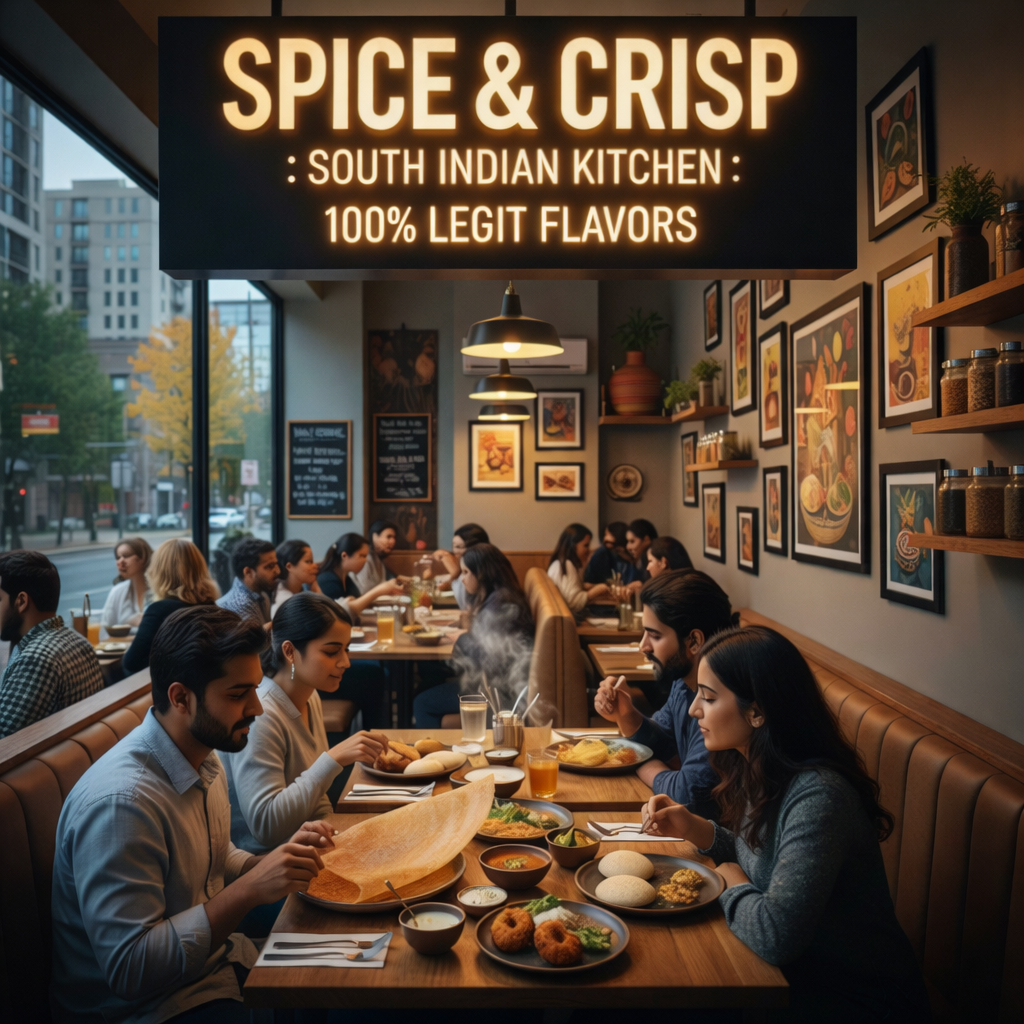
A delicious smell wafted through the air—an extremely fragrant blend of toasted mustard seeds, curry leaves and something rich and savory. It was Saturday afternoon in Charlotte, North Carolina, as I entered a store located next door to a yoga studio and dry cleaner, where I could see and hear a griddle sizzling with very thin dosas cooking away on top of it. A young family was sitting at another table near a corner and their toddler was fascinated watching the chef’s hands quickly create the perfect round shape of dosas while spreading the batter. This is one of the many wonders of the many south indian restaurants charlotte nc, and brings to light the constant growth in popularity for the traditional south indian fare with the ever-increasing demand for bold, authentic flavors in Charlotte’s wide variety of food scene today.
There are many wonderful options to chew on in Charlotte’s food scene today. A very rich culinary tradition brought to you by the fast-growing South Asian Community throughout the greater Charlotte, North Carolina area has allowed south indian style food, including the use of fermented batters, coconut milk, and spicy chutney, to become an extremely popular choice among many people who have discovered south indian food along with long-time fans who enjoy the flavors of idlis. Anyone who enjoys idlis or has any interest in trying one of the many different types of dishes that use the masala of south india will certainly have lots of opportunities to enjoy many different flavors in Charlotte.
South Indian cooking can be described as very different from Northern Region Indian cooking in many different possible ways and it is arguably one of the most delicious forms of Indian cuisine. Rice and lentils are the main ingredients of most South Indian dishes; all of Northern Region Indian dishes usually consist of some form of wheat-based bread. In addition, coconut, tamarind, and curry leaves) are an integral part of almost every South Indian dish. They each give South Indian cuisine unique freshness, flavour, and character. In other words, the plants that are used in South India are a major influence in developing culinary style (the ingredients) for the cuisine of the region and Southern India has a more tropical climate compared to Northern order to develop their style of cooking. Tropical environments tend to provide the base for more vegetarian dishes, whereas colder climates tend to provide the base for heavier dishes made with meat (animal fat).
In the same way, these regions differ in preparation techniques. Fermentation is used in the preparation of a number of important South Indian staples (dosa, idli) which sit overnight after being prepared to develop the distinct sourness that balances the spices, Steaming is commonly used in breakfast foods instead of frying. For example, sambar, a type of lentil stew, is served at virtually all South Indian meals. Its golden colour adds warmth to the food and comfort to the eater.
In Charlotte, finding a good South Indian restaurant means looking for places where your dosas come out of the kitchen hot and crispy, and where the sambar has been simmering for hours. Over the past few years, South Indian restaurants in Charlotte have become increasingly popular, and this popularity has created an image of restaurants that maintain their quality throughout. Most of these restaurants have built their reputations on being consistently good, having great flavor, and having what people say is “like grandma’s cooking”. The best South Indian restaurants in Charlotte have certain common features: they use freshly ground chutneys, make dosas on a hot griddle as you order them, and their sambar is sour and complex. Most of these places are family-owned and have been passed down from one generation to another, and that can be tasted in every dish. On weekends, many of these places have lines of regulars waiting for tables. They have become part of the regular routine for many local South Indian communities, and the wait is well worth it.
The search term “south indian restaurants near me” has observed an upward trend in terms of search volume for local searches, which indicates a growing interest from residents throughout Charlotte for these types of regional Indian Food Offerings. The trend has shifted from a niche desire to one that most people would consider mainstream; for example, more casual diners now recognize the difference between a traditional naan bread and dosa style of bread. Food bloggers on social media platforms such as Instagram frequently post about South Indian food establishments; their feeds contain beautiful photographs of soft ghee-coated dosas, rich sambar, and other delicious dishes that showcase the beauty of South Indian cuisine.
One reason why South Indian food is gaining popularity among residents in Charlotte is due to its versatility, as it contains a wide variety of vegetarian and even vegan dishes available; therefore, groups of people who have different dietary restrictions are able to unite around eating South Indian food. The flavor profiles of South Indian food are complex. For example, the sweet, tart flavours imparted by coconut, tamarind, and ginger add an additional level of complexity to Serve, without being overly spicy. When eating a traditional meal of rice and lentils, it is satisfying to consume food that is solidly based in nourishing, hearty, wholesome carbohydrates.
While dosas may get all the glory, there’s so much more to discover on South Indian menus. For example, idli are light, fluffy steamed rice cakes that are surprisingly filling for breakfast when served with sambar and chutney. Pongal is a rice and lentil porridge spiced with black pepper and cumin — a comforting bowl of goodness. And then there’s biryani — which you can find in all parts of India, but the South Indian versions from Hyderabad and Tamil Nadu have their own unique spices and preparation techniques.
If you’re an adventurous eater, a traditional South Indian thali can really expand your horizons. Thali consists of various offerings served together on a banana leaf; typically, this includes rice, sambar, rasam, a vegetable curry, yogurt, and several side dishes. The idea of a thali is to mix and match the dishes to see how they enhance or contrast with each other. A thali is both messy and a fun way to eat very delicious dishes.
Restaurants in South India frequently serve as communal spaces. Families frequent them on Sunday mornings after attending church services, kids run around under tables while the parents talk over filter coffee, a strong and foamy coffee brewed from roasted coffee beans and mixed with chicory, unlike the iced lattes that many Americans are familiar with. The restaurants offer both a return to one’s native customs and an opportunity for those from other cultures to learn about them through the food served.
The fact that the chefs and restaurant owners are all of South Indian descent and come from the states of Tamil Nadu, Karnataka, and Andhra Pradesh provides for the continued preservation of the culinary traditions of these states. Chefs, restaurant owners and cooks are like many other cooks today in that they will still rely heavily on traditional kitchen ingredients and methods when producing their food. The ingredients used to prepare many of the recipes were passed down through generations of family members. The types of ingredients used in many South Indian recipes have been kept secret for years and were considered exotic at some point. Therefore, many cooks and chefs of South India will go to great lengths to obtain these ingredients that have been used for years to make great-tasting dishes.
Visitors to Charlotte, NC, can expect to find a wide variety of South Indian dining establishments to meet their specific cravings. Near the college campus, several low-cost options exist for patrons looking to grab a quick, casual meal, while more upscale restaurants on the downtown Charlotte offer guests a more refined dining experience—a polished ambiance accompanied by attentive service and exquisitely presented meals. If you are searching specifically for a place that serves very crispy dosas in the morning, then knowing which locations feature this kind of preparation is critical local knowledge when exploring the South Indian food scene in Charlton.
In addition, several unwritten rules exist that are important for anyone new to experiencing South Indian cuisine in Charlotte. First, feel free to eat with your hands—it’s customary to do so (and many people believe it enhances the flavour of the food); second, don’t hesitate to ask your server any questions if the menu appears to be overly complicated or daunting; and last, although many South Indian restaurants will list medium spice levels on their menus, keep in mind that medium heat level will correspond to actual spice levels—so if you do not enjoy or are afraid of spicy foods, start at the lowest heat option available.
Charlotte also serves up South India. In fact, it’s one of the few cities that provides true South Indian experiences. There are numerous restaurants and cafés serving many different types of South Indian food, but what sets these apart is each establishment’s commitment to tradition while providing fresh and healthy meals made using local ingredients. That said, even if you’re just after a meal, Charlotte’s many great eateries will still provide you with hours of fun exploring their many offerings.
Looking for authentic South Indian food that you can easily find in Charlotte? If that’s the case, look no further than Exotica. They offer delicious, local, homemade dishes prepared by talented chefs who have mastered their craft and follow all the rules of great Indian cooking, so you can be assured of the best quality available.
Q: What is the most popular South Indian dish?
A: Dosa, a crispy fermented rice and lentil crepe, is widely considered the most popular South Indian dish, often served with sambar and coconut chutney.
Q: Is South Indian food spicy?
A: South Indian food can be spicy, but it’s also known for tangy, coconut-based flavors. Many dishes offer moderate heat that’s balanced with tamarind, yogurt, and fresh herbs.
Q: What’s the difference between North and South Indian food?
A: South Indian cuisine relies more on rice, lentils, and coconut, while North Indian food features wheat-based breads, cream-based curries, and tandoor cooking.
Q: Are South Indian restaurants in Charlotte NC vegetarian-friendly?
A: Yes, many South Indian restaurants in Charlotte specialize in vegetarian dishes, offering extensive plant-based options like dosas, idli, sambar, and various vegetable curries.
This guide was researched and written by a local food writer with extensive experience exploring Charlotte’s diverse culinary landscape and a particular passion for regional Indian cuisines.